

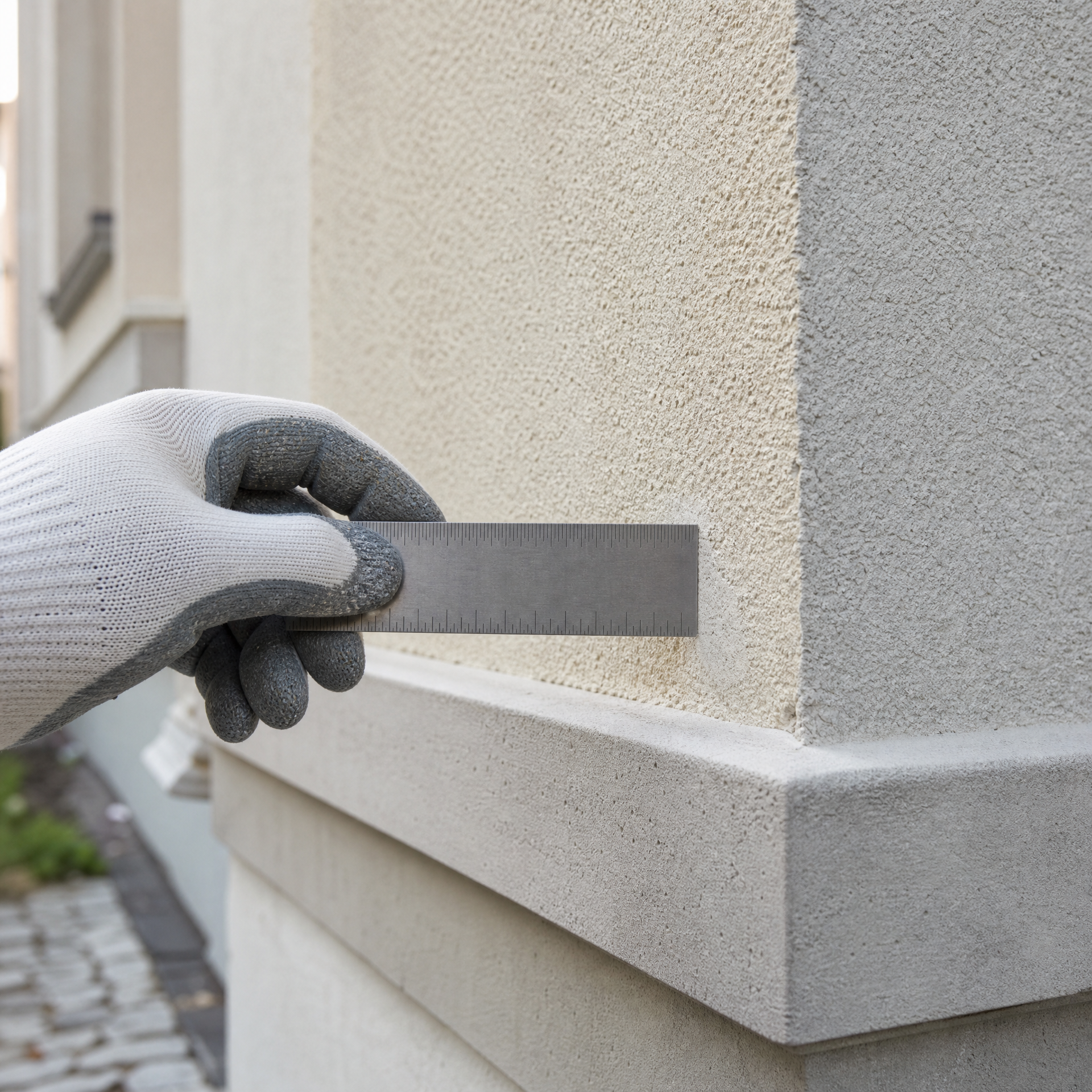
A building exterior is easy to overlook because change happens gradually. A faint stain may become more visible over a season; a small crack may widen after repeated weather cycles. Regular observation does not replace specialist assessment, but it helps owners recognise when the facade needs more than routine cleaning.
A simple check once or twice a year can be enough to create a useful record. Look at the building from several angles in daylight and take photographs of any unusual areas. This makes it easier to tell whether a mark is static or progressing. If you see changes that deserve a closer look, it is reasonable to arrange a professional facade inspection before deciding on a repair or a new coating.
Focus on the areas that receive the most stress
Some parts of a facade are more exposed than others. Window openings, ledges, wall bases, corners, parapets and areas near downpipes are common points to observe. Shade can encourage staining or growth, while driving rain and strong sunlight can affect exposed elevations differently. The aim of a visual check is not to diagnose every issue but to notice patterns.
Pay attention to loose material, peeling layers, fine lines around openings, damp-looking areas and deposits that return after cleaning. Also look at components that direct water away from the wall. Blocked gutters, damaged joints or ground levels that hold moisture close to the facade can influence the condition of otherwise sound finishes.
Cleaning is useful only when it suits the surface
Cleaning can refresh an exterior, but it should be proportionate to the material and condition. The wrong pressure, abrasive method or cleaning product can damage a coating, force water into weak areas or leave visible patches. Before arranging any intensive treatment, establish what the facade is made from, whether the surface is stable and whether there are existing repairs or coatings to consider.
An appropriate plan combines method and protection. Nearby windows, planted areas, walkways and drainage should be considered in advance. A discussion of facade maintenance advice in Berlin can clarify whether gentle cleaning, repair work or a broader refurbishment is the suitable next step.
Repair before applying a new finish
A new coating may improve the appearance of a wall, but it cannot correct an unstable or damp substrate. Areas with cracks, hollow sections or failed render need suitable preparation before they are covered. The same applies to persistent moisture staining: first identify and address the probable source, then decide how the affected area should be restored.
A well-defined repair scope should say what will be cleaned, what will be removed, how damaged areas will be rebuilt and which coating system is proposed afterwards. It should also explain the access method and how repairs will be checked at the end. Clear descriptions make it easier to compare proposals and avoid assumptions about what is included.
Keep a modest maintenance record
A small folder of dated photos, previous invoices and notes about materials used is valuable over time. It supports future planning and gives a contractor a better starting point. Routine care of gutters, drainage and vegetation can also reduce avoidable exposure at the building exterior.
Timely action need not mean a full renovation. Sometimes it means documenting the surface, making a targeted repair and returning to observe the area later. When the condition is uncertain or a larger project is being considered, homeowners can discuss their facade project with a specialist and begin from a clear assessment rather than an assumption.